Stacked With Intent: The Secret Psychology Behind Your Ever-Growing Book Collection

Let's be honest. You probably have more books than you'll ever realistically read. Maybe they're stacked on a nightstand that's starting to lean slightly to one side. Maybe they've colonized a corner of the living room floor, crept onto the kitchen counter, or quietly multiplied across three different tote bags you've been meaning to unpack. And if you're anything like the millions of readers who've made "TBR pile" a household phrase, you've probably felt at least a flicker of guilt about it.
Here's the thing, though: that guilt? Largely unearned.
The to-be-read pile — affectionately known in reading communities as the TBR — has become one of the defining rituals of modern book culture. It's part aspiration list, part comfort object, part personal manifesto. And according to people who study human behavior as well as the booksellers who watch readers build these collections in real time, there's a lot more going on in that stack than a simple failure to keep up.
Why We Buy Books We Know We Won't Read Immediately
Behavioral psychologists have a term for the mental state that drives TBR accumulation: anticipated utility. Basically, when you pick up a book at a store or click "buy" online, your brain isn't just registering a transaction. It's running a little simulation of your future self — the version of you who has a quiet Sunday afternoon, a good cup of coffee, and finally cracks open that novel about post-WWII Vienna you've been eyeing for six months.
That simulation feels genuinely good. Purchasing the book, in a very real neurological sense, delivers a portion of the pleasure before you've read a single page. It's the same reason people enjoy planning vacations almost as much as taking them.
Dr. Pamela Rutledge, a media psychologist who has written extensively on narrative and behavior, has noted that books function as identity objects for many readers. They signal not just what we've consumed, but what we value, what we're curious about, and where we imagine our intellectual lives heading. A TBR pile, in that context, isn't clutter. It's a self-portrait.
The Guilt Trip Nobody Invited
So if TBR piles are psychologically healthy, why do so many readers feel vaguely ashamed of theirs?
A lot of it comes down to productivity culture. Americans, more than almost any other nationality, have a complicated relationship with leisure that isn't visibly "optimized." Reading is supposed to be enriching — but enriching in a measurable, completable way. Finishing a book feels like an achievement. Having forty unfinished ones feels like a deficit.
Social media has made this worse and better simultaneously. Platforms like Bookstagram and BookTok have turned reading into a communal, often competitive sport. Annual reading challenges, "books read in 2024" recap posts, and the quiet pressure to have finished whatever everyone else is discussing can make a sprawling TBR feel like evidence of falling behind.
But those same platforms have also normalized the TBR pile in a way that's genuinely liberating. Readers openly post photos of their overstuffed shelves with captions full of zero apology. The hashtag #TBRpile has hundreds of thousands of posts across platforms. There's a whole subculture built around the specific pleasure of acquiring books, separate from the act of reading them — and that community is largely a supportive one.
"People come in and they'll say, almost apologetically, that they still haven't read the last three things they bought here," says one independent bookseller from a well-loved shop in the Pacific Northwest. "And I always tell them: good. That means you're still excited about what's coming next. The day you stop buying books faster than you read them is probably a sadder day than you think."
Your TBR Is Actually a Hope Chest
There's a concept in literary culture sometimes called tsundoku — a Japanese word that describes the habit of acquiring books and letting them pile up unread. It carries no inherent shame in its original context. It's simply an observation about a particular kind of collector's behavior, one that many readers recognize in themselves immediately.
What's interesting about tsundoku is what it implies: that the books themselves have value beyond being read. They represent possibility. Each unread title is a door that hasn't been opened yet, a conversation you haven't had, a world you haven't stepped into. The pile isn't evidence of neglect. It's evidence of appetite.
Think about what your TBR actually contains. Probably a mix of things someone recommended that sounded perfect for a specific mood you haven't been in yet. A debut novel from an author whose voice intrigued you. Something heavy and important that you're saving for when you have the mental bandwidth to do it justice. Maybe a few comfort reads you're hoarding for a rough week.
That's not disorganization. That's curation.
Practical Ways to Make Peace With the Pile
For readers who genuinely want to be more intentional without turning their TBR into another source of anxiety, a few approaches tend to work well:
Stop treating it like a queue. A TBR pile isn't a waiting line where books expire if you don't get to them in order. Give yourself permission to skip around based on mood, season, or what you need in a given week. Reading should match your emotional state, not override it.
Do a seasonal audit. A few times a year, flip through your unread books and ask honestly whether you still want to read each one. It's okay if the answer is no. Donating or passing along books that no longer spark curiosity makes room — literally and mentally — for the ones that do.
Set a soft "one in, one out" intention. Not a rule, not a punishment, just a gentle nudge toward balance. When you bring home something new, spend five minutes with something already on the shelf. Even a chapter counts.
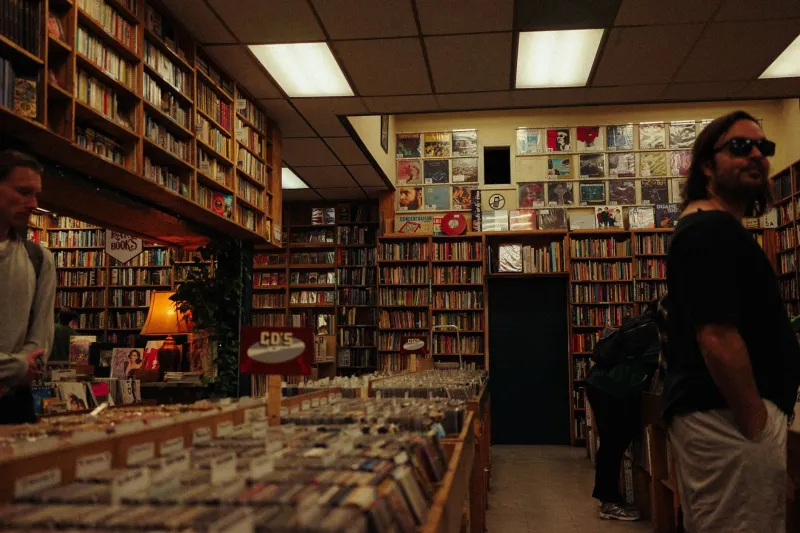
Celebrate the browsing. Some of the best moments in a bookstore are the ones where you pick up something you hadn't planned on, read the back cover, and feel that little pull of I need this. That feeling is worth honoring, even if the book sits on your shelf for two years before you're ready for it.
The Books Are Waiting, and That's the Point
At its core, a TBR pile is an act of optimism. It assumes that there will be more time, more evenings, more long weekends with nothing pressing. It assumes that your curiosity isn't going anywhere. Every book you add to the stack is a small vote of confidence in your own future reading life.
That's not something to feel guilty about. That's something worth celebrating — preferably while adding one more title to the pile.
Stop by your local indie, browse without a plan, and let something catch your eye. The stack will be waiting when you get home.