Writing Back: How Readers Are Turning Book Margins Into a Living Conversation
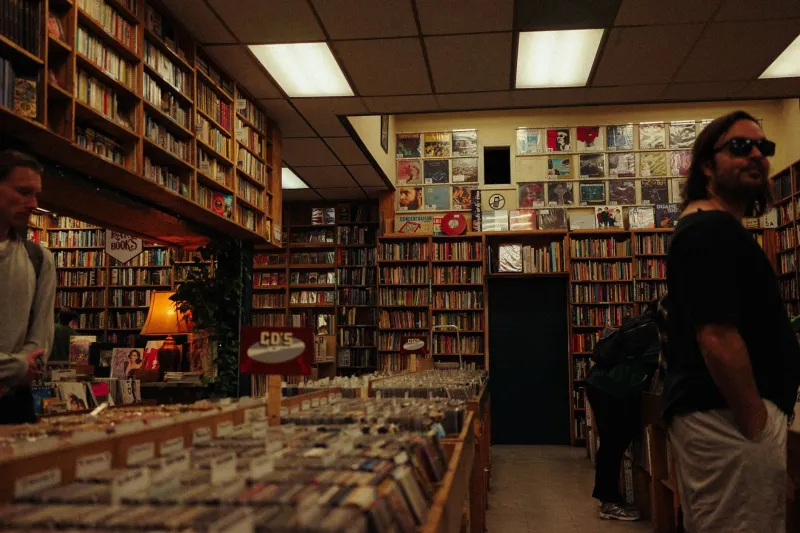
There's a paperback copy of Beloved floating around a used bookstore in Portland, Oregon, right now. Its margins are dense with pencil notes — questions about memory and trauma, underlined passages connected by arrows to scrawled reactions three pages later, a single word written in the gutter of page 87: breathless. Whoever owned that book before wasn't just reading it. They were arguing with it, grieving alongside it, and ultimately, talking back to Toni Morrison.
This is what the marginalia movement looks like in practice. And it's having a genuine moment.
From Forbidden to Fashionable
For generations, American readers were taught that writing in books was somewhere between rude and criminal. Libraries stamped "DO NOT WRITE IN THIS BOOK" on inside covers. Teachers confiscated pencils before handing out classroom copies. The book as object held a kind of untouchable reverence that discouraged personal interaction.
But something shifted. Part of it is social media — TikTok's #BookTok community and Instagram's reading culture have made the aesthetics of annotation wildly popular, with readers posting close-up photos of their annotated pages the way others post meal prep or morning routines. Part of it is a broader cultural conversation about active versus passive consumption. And part of it is simply that readers are pushing back against the idea that literature should feel like a museum exhibit — beautiful, distant, and hands-off.
"Annotation is basically just thinking out loud on paper," says one enthusiastic reader who runs an annotation workshop series out of a community library in Austin, Texas. "Once people give themselves permission to do it, they can't stop. It's like the book finally starts talking back."
What Readers Are Actually Writing
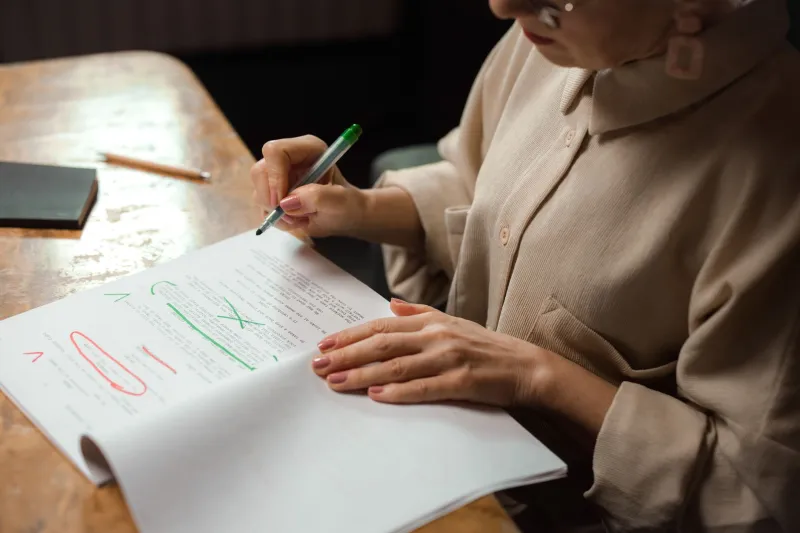
If you've ever flipped through a heavily annotated used book, you know the range is staggering. Some readers are methodical — color-coded systems where yellow highlights flag beautiful prose, pink marks thematic elements, and blue circles vocabulary worth looking up. Others are pure stream-of-consciousness, filling margins with reactions that range from "YES" written three times in a row to lengthy rebuttals that spill onto sticky notes tucked between pages.
Common annotation styles tend to fall into a few loose categories:
The Conversationalist writes directly to the characters or the author. Expect phrases like "you're wrong about this" or "I see what you're doing here" peppered throughout. These readers treat the book as an ongoing dialogue rather than a monologue.
The Connector draws lines between ideas across pages, or jots references to other books, films, or personal memories triggered by the text. Their annotations turn a single novel into a web of associations.
The Questioner fills margins with questions — some rhetorical, some genuine. "Why does she stay?" "Is this foreshadowing?" "What does the lighthouse actually represent?" These readers are working through meaning in real time.
The Emotional Responder keeps it short and visceral. A single exclamation point. The word no underlined twice. A small drawing of a broken heart. These annotations are less about analysis and more about recording the raw experience of reading.
None of these approaches is more valid than another. The point, as most annotation enthusiasts will tell you, is that the act of marking forces you to slow down and actually process what you're reading.
The Science Behind the Scribble
It turns out there's solid cognitive research backing up what dedicated annotators have always suspected: writing while you read genuinely helps you understand and remember more.
Studies on active reading strategies consistently show that annotation — whether physical or digital — improves both comprehension and long-term retention. The act of translating a reaction into words, even just a few, requires the brain to do something more demanding than passive recognition. You have to formulate a thought, which means the material has to actually penetrate rather than just wash over you.
Psychologists who study reading describe this as "elaborative interrogation" — the process of asking yourself why something is true or significant, which creates stronger memory traces than simply re-reading. When you write "but this contradicts what she said on page 12" in a margin, you're doing something cognitively sophisticated. You're holding multiple pieces of information in working memory, comparing them, and generating a new thought. That's a workout, and your brain remembers workouts.
For students and lifelong learners especially, annotation can transform reading from a passive activity into something closer to active study — without the clinical detachment that word sometimes implies.
Authors Who Love Finding Their Books Marked Up
Here's the thing that surprises a lot of readers: many authors genuinely love the idea of their books being annotated. Some of them seek out marked-up used copies of their own work specifically to understand how readers are engaging.
The author of a debut literary novel described the experience of discovering a heavily annotated copy of her book at a secondhand shop in Brooklyn as "one of the most emotional moments of my career." A previous reader had circled a line she'd almost cut during edits and written "don't ever delete this" in the margin — not knowing, of course, that the author had nearly done exactly that.
"It felt like a conversation across time," she said. "That reader and I will probably never meet, but we connected over that line in a way that felt completely real."
This is the intimacy that marginalia can create — a kind of ghost conversation between the person who wrote the book and the person who received it, mediated by nothing more than white space and a pencil.
How to Develop Your Own Annotation Style
If you're ready to stop treating your books like museum pieces, here's how to get started without overthinking it:
Start with a pencil. Seriously. The erasability removes the pressure of permanence. Once you get comfortable, you can graduate to pens or highlighters if you want.
Resist the urge to create a perfect system first. Let your style emerge organically. Many experienced annotators say their approach evolved over dozens of books before it felt natural.
Focus on reactions over summaries. You don't need to note what happened — you need to note what you felt or thought about what happened. That's where the value is.
Date your annotations. Coming back to a book you annotated five years ago and seeing how your reactions have changed is one of the genuinely revelatory pleasures of this practice.
Don't annotate everything. Save your marks for the moments that genuinely strike you. Over-annotation can dilute the impact and turn reading into homework.
The Book as Artifact
There's a broader cultural argument to be made here about what books are for. If literature exists to create connection — between reader and writer, between one reader and another, between a person and their own inner life — then annotation is one of the purest expressions of that purpose.
A book you've marked up is a record of who you were when you read it. It's a map of your thinking, your questions, your emotional responses at a specific moment in time. Passed along to another reader, it becomes something richer still: a layered document of multiple encounters with the same text.
At TDC Bookstore, we've always believed that stories find their readers for a reason. Marginalia is just one way of making sure those stories know they've arrived.