Lost in the Aisles: How Wandering a Bookstore Trains Your Literary Eye Better Than Any Algorithm
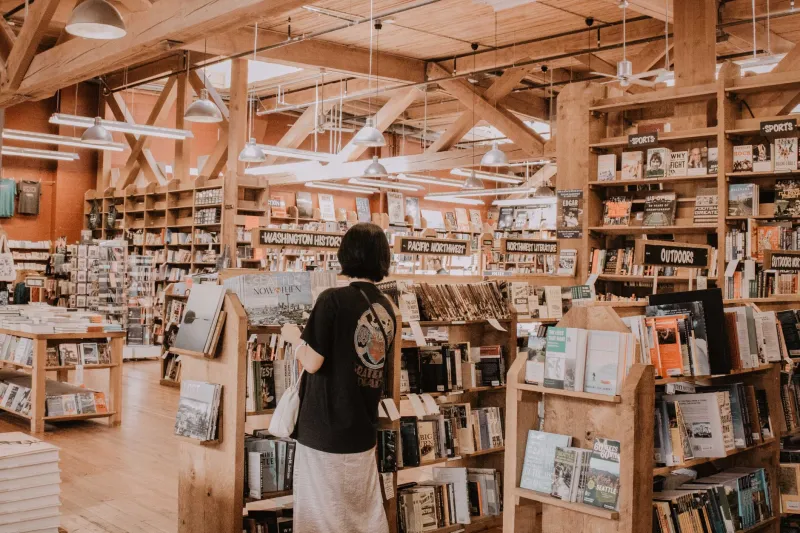
Picture this: You walk into your local independent bookstore on a Saturday afternoon with a vague intention to pick up something for a long weekend. You leave an hour and a half later with three books you'd never heard of, a dog-eared staff recommendation card tucked in your pocket, and the lingering memory of a conversation between two strangers debating whether Cormac McCarthy ever actually wrote a funny line. You didn't find what you came for. You found something better.
This is what regulars at indie bookstores call the drift — that unplanned, unhurried meander through shelves that somehow always ends in discovery. And while it might feel like a happy accident, researchers and booksellers alike are starting to recognize it as something far more intentional: a genuine form of literary education.
Your Brain on Serendipity
Neuroscientists have spent years studying what happens when we stumble onto something unexpected and delightful. The brain's reward circuitry — the dopamine pathways usually associated with food, music, and social connection — lights up during moments of serendipitous discovery in ways that feel meaningfully different from the satisfaction of getting exactly what you searched for.
When you already know what you want and you find it, the brain essentially checks a box. Efficient. Tidy. Forgettable. But when something surprises you — when a jacket illustration stops you mid-stride, when a title makes you tilt your head, when you flip to a random page and read a sentence that shouldn't mean anything to you but somehow does — your brain encodes that moment differently. It's more emotionally charged, more memorable, and, crucially, more likely to prompt deeper reflection.
For readers, this means the book you stumbled upon in a Portland indie shop on a rainy Tuesday is going to stick with you in ways that the fifteenth title in your Goodreads recommendations queue probably won't. Discovery with friction creates meaning. Frictionless discovery, ironically, often creates forgettability.
The Filter Bubble Problem Nobody's Talking About
Algorithms are genuinely impressive pieces of technology. They learn your patterns, track your preferences, and surface content that matches your established tastes with unsettling precision. For someone who needs a book fast and has clear preferences, that's genuinely useful.
But here's the catch: recommendation engines are, by design, backward-looking. They show you more of what you've already liked. They optimize for comfort and familiarity. And over time — often without readers even noticing — they quietly narrow the field. You start in a wide meadow of possibility and end up in an increasingly cozy, increasingly small room.
Literary critics and avid readers sometimes call this the taste plateau. You keep reading, but you stop growing. Your opinions get sharper within a narrowing range, but your frame of reference stops expanding. You become very good at evaluating books that are already a lot like books you've already read.
Independent bookstores, almost by accident, are the antidote to this.
Curation Is Not the Same as Personalization
When you ask a bookseller at a well-run indie shop for a recommendation, something completely different happens than when you click a "You Might Also Like" button. A good bookseller reads your body language, asks what you've loved and what left you cold, and then — here's the key part — recommends something based on their own deep knowledge of literature, not a database of your purchase history.
Sarah Henning, a bookseller at a beloved shop in the Kansas City area, puts it plainly: "I'm not trying to give you more of what you already know you like. I'm trying to give you the book that's going to expand what you think you like. Those are very different goals."
This distinction matters enormously for developing literary taste. Taste isn't just preference — it's the capacity to make meaningful distinctions, to articulate why something works, to hold a book up against a wide range of other books and evaluate it honestly. That capacity grows when you read widely and unpredictably. It stagnates when you read narrowly, even if you're reading a lot.
Booksellers curate their shelves with exactly this kind of expansion in mind. The face-out displays, the handwritten staff picks, the themed tables near the entrance — these are all acts of editorial judgment by people who have read voraciously and thought carefully about what deserves attention. Browsing those shelves means absorbing that judgment, even passively.
What Your Hands Know That Your Screen Doesn't
There's also something worth saying about the purely physical experience of handling books. Reading jacket copy while holding the actual object is a different experience than reading a product description on a screen. The weight of a book, the texture of its cover, the font choices, the paper quality — all of these communicate something about what kind of reading experience awaits you. Experienced readers develop an almost instinctive sense for this. They learn to read objects, not just text.
This tactile dimension also slows you down in a useful way. Scrolling through digital recommendations takes seconds. Pulling a book from a shelf, reading the back, flipping to the first page, checking the author bio — that takes two or three minutes. And that slight friction, that small investment of time and attention, actually improves the quality of your decision. You're making a considered choice rather than a reactive one.
Over dozens and dozens of bookstore visits, this practice compounds. You get better at evaluating books quickly. You develop a more calibrated sense of what you're looking for and what's worth your time. You become, in the most practical sense, a better reader and a more confident critic.
The Conversations You Didn't Plan to Have
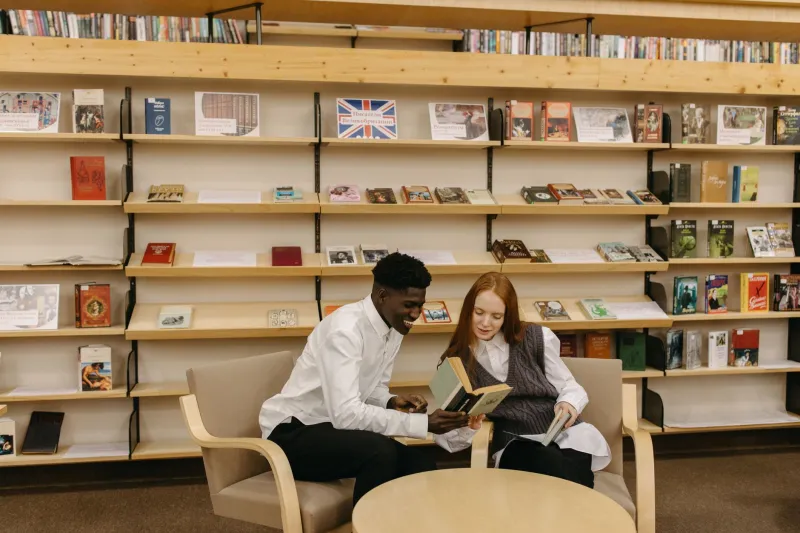
Then there are the overheard exchanges — the couple arguing about whether the ending of a novel was earned, the teenager asking a bookseller if something is "actually scary or just kind of creepy," the book club of retirees debating a memoir's reliability. These ambient conversations, which happen constantly in a busy independent bookstore, are an underappreciated form of literary immersion.
Reading can be a solitary act, but literary taste develops in community. Hearing how other readers talk about books — what they value, what frustrates them, what moves them — expands your own critical vocabulary. It gives you new frameworks for thinking about what you read.
No algorithm delivers that. No streaming platform for books can replicate the texture of a Saturday afternoon in a good shop, surrounded by people who care deeply about stories.
The Case for Getting Lost
None of this is an argument against digital reading or online book discovery. Those tools have genuine value, and they've brought books to readers who might not otherwise have access to them. That matters.
But if you want to develop real literary depth — if you want to become the kind of reader whose opinions are worth something, who can articulate not just what they liked but why, who surprises themselves regularly with what they're capable of loving — the bookstore is still one of the best classrooms going.
Go in without a list. Let the shelves talk to you. Trust the bookseller who hands you something unexpected. Linger. Get a little lost.
Your taste will thank you for it.