Ears Wide Open: How Audiobooks Are Quietly Rewriting America's Reading Identity
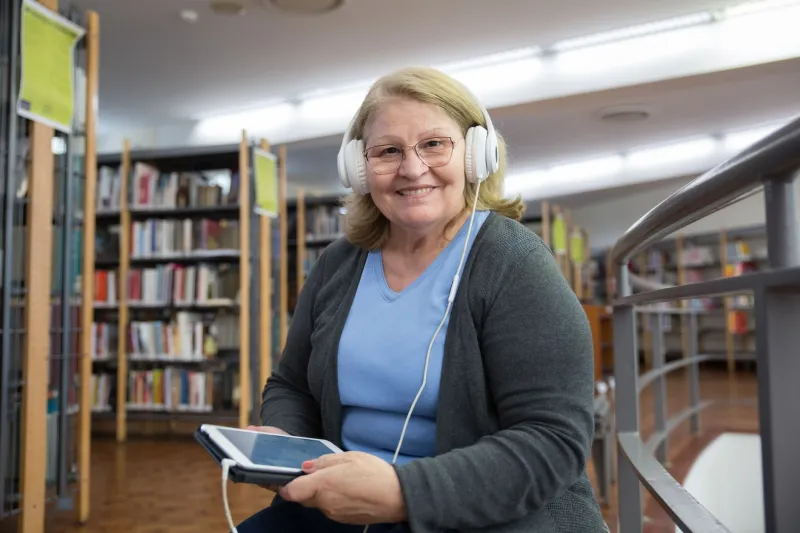
Somewhere on a highway outside of Columbus, Ohio, a woman is crying over a memoir she hasn't technically read a single word of. Somewhere else, a guy on the L train in Chicago is three chapters deep into a thriller, eyes forward, earbuds in, completely unreachable. And in a suburb of Atlanta, a retired teacher has "read" more books in the last two years than in the entire previous decade — all of them listened to while gardening.
The audiobook boom isn't coming. It's already here, already reshaping the way Americans relate to stories, and already stirring up some genuinely fascinating — and occasionally contentious — conversations in literary circles. According to the Audio Publishers Association, audiobook revenue in the US has grown for over a decade straight, with recent annual figures surpassing $1.8 billion. That's not a side format anymore. That's a movement.
But what exactly is it changing? Turns out, quite a lot.
The Genre Gap: What Sounds Good Isn't Always What Reads Well
Not all books are created equal in audio form, and the data makes that pretty clear. Thrillers, mysteries, memoirs, and self-help titles consistently dominate audiobook charts. There's an intuitive logic to it — a gripping thriller narrated with pacing and tension hits differently through headphones than on a page. Memoirs, especially celebrity ones, often feel more intimate when you're hearing the author's actual voice or a close approximation of it.
Literary fiction and poetry, on the other hand, tend to hold their ground in print. Dense, structurally ambitious novels — the kind where you might flip back three pages to re-read a paragraph — don't always translate smoothly to audio. Readers who love to linger, annotate, and sit with language often find audio too fast, too linear.
This genre divide is quietly influencing what kinds of books get written, marketed, and greenlit. Publishers are increasingly thinking about "audio potential" during acquisitions. A manuscript with punchy dialogue, a strong narrative voice, and chapter lengths that feel natural for listening sessions? That's increasingly attractive in today's market. A sprawling, footnote-heavy work of historical fiction with seventeen named characters? Maybe a tougher sell in audio, regardless of its literary merit.
The ripple effect is real, even if it's subtle.
Authors Are Writing With Their Ears Now
Ask authors about this shift and you'll get a range of reactions — from enthusiastic adaptation to quiet concern.
Some writers have become genuinely excited about audio as a creative consideration. They think about rhythm at the sentence level, about how dialogue will land when spoken aloud, about whether a chapter ending gives a listener a natural pause point. It's not unlike how screenwriters think about visual pacing — a different muscle, but one that sharpens the work.
Others are more ambivalent. There's a school of thought that says the best literary prose is meant to be read, that the eye moving across a sentence and the brain processing it in silence is a fundamentally different — and not lesser — experience than hearing it rendered by even the most talented narrator. Writing toward audio performance, some argue, can smooth out the very textures and idiosyncrasies that make a voice distinctive on the page.
And then there's the narrator question, which is its own fascinating rabbit hole. A great narrator can elevate a good book into something unforgettable. A poor match between narrator and material can make even a brilliant novel feel flat. Authors who've had the experience of hearing their work narrated for the first time often describe it as uncanny — like meeting a version of your own thoughts you didn't know existed.
The "Real Reader" Debate (And Why It's Kind of Exhausting)
Here's where things get a little spicy in book communities, including right here at TDC Bookstore: are audiobook listeners really readers?
The gatekeeping instinct is understandable, even if it's not particularly productive. There's a certain attachment to the physical act of reading — eyes on the page, book in hand — that feels inseparable from the identity of being a book person. Audiobooks can seem, to some, like a shortcut. Passive. Less serious.
But that framing doesn't really hold up under scrutiny. Comprehension studies have generally shown that listening and reading produce comparable understanding and retention for most people and most types of content. The emotional engagement that makes books meaningful — the connection to characters, the absorption into a narrative world, the way a well-turned sentence can stop you in your tracks — doesn't disappear just because the delivery mechanism changed.
For people with dyslexia, visual impairments, or other print-reading challenges, audiobooks aren't a lesser option. They're often the only option, and dismissing them as somehow not counting is both elitist and frankly just wrong.
That said, it's fair to acknowledge that different formats create different experiences. Listening to a book while driving is not the same as sitting in a quiet room with it for two hours. Both are valid. Neither is the only "real" way to engage with a story.
At TDC Bookstore, we've always believed that stories find their readers — not the other way around. If someone's story found you through a speaker in your kitchen while you were making dinner, that counts. Full stop.
What This Means for Bookstore Communities
The interesting challenge for independent bookstore communities and literary spaces is figuring out how to embrace audio listeners without losing what makes physical book culture special.
Audiobook listeners are often voracious. They consume more titles per year than the average print reader simply because they can stack listening onto activities that don't allow for reading. They have opinions. They recommend books. They show up to author events. They are, in almost every meaningful sense, part of the literary community — even if they don't always show up in traditional sales figures for print titles.
Book clubs are starting to catch on. More and more, groups are welcoming members who listened rather than read, recognizing that the conversation — which is really the point — doesn't require everyone to have turned the same physical pages.
The smartest bookstores and literary platforms are leaning into this rather than resisting it. Hosting listening parties. Creating audio-specific recommendation lists. Featuring narrators alongside authors in interviews and events. Treating the audiobook not as a threat to print culture but as an on-ramp that brings more people into the conversation.
The Bottom Line
Audiobooks aren't replacing books. But they are changing what stories get told, how authors tell them, and who gets to call themselves a reader. Those are significant shifts, and they deserve honest, curious attention rather than reflexive defensiveness.
The story of American reading is always evolving — from serialized newspaper fiction to paperback originals to e-readers to now this. Each new format brought hand-wringing, and each time, the readers adapted, the writers adapted, and the stories kept coming.
So plug in, press play, and don't let anyone tell you that what you're doing doesn't count. You're reading. You're just doing it with your ears.